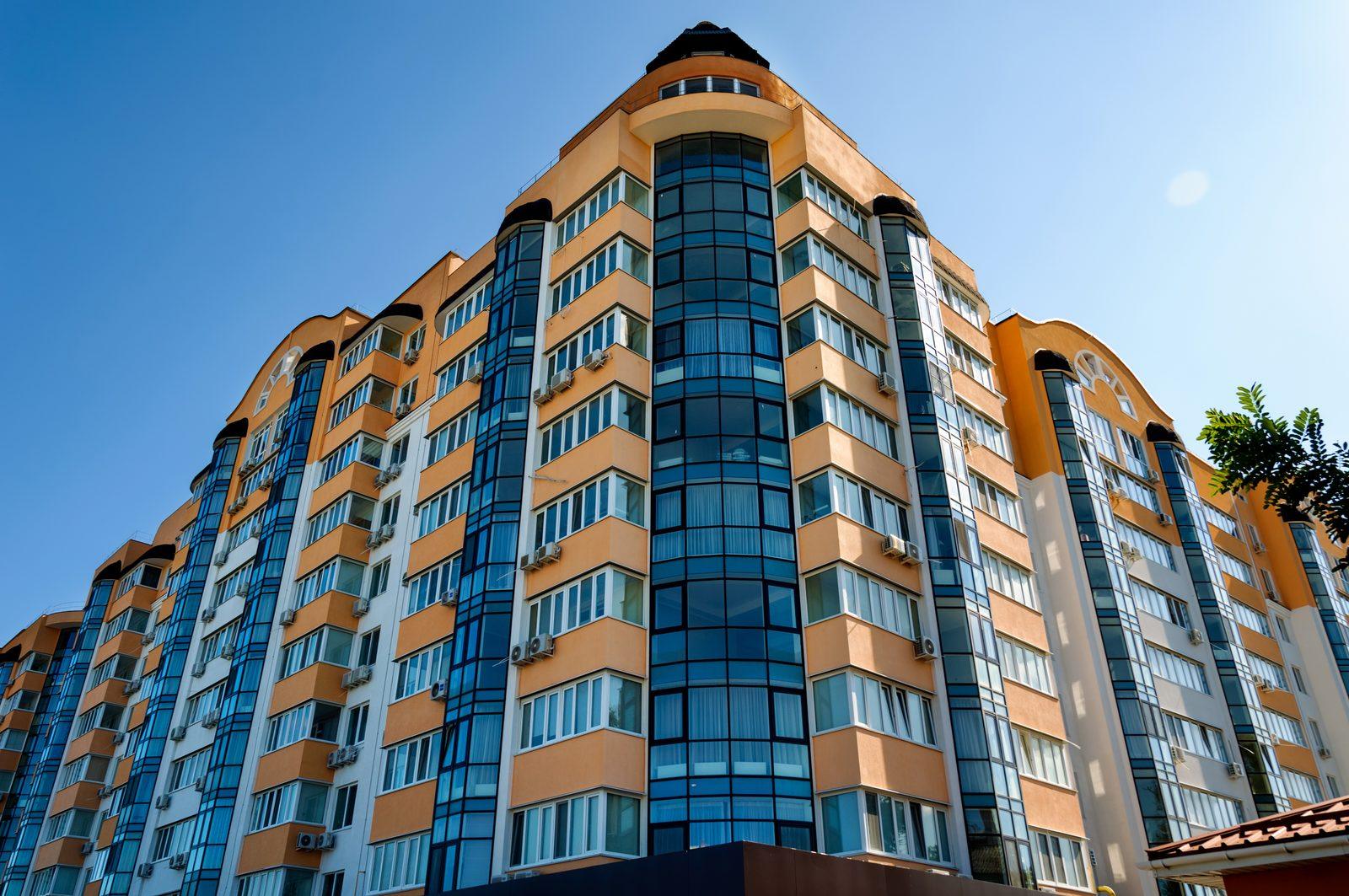
Access control for apartment and condo communities
Malibu runs the shared doors in multi-family buildings — the amenities, the facilities, the common areas residents use every day, and the elevator that reaches them. Turnover is what makes it pay for itself.
Shared doors, not unit doors
Malibu covers the doors a whole building shares: fitness rooms, pool houses, clubhouses and community rooms, package and mail rooms, laundry, bike and resident storage, parking garages, and trash and compactor enclosures. Those are the doors everyone in the building touches and nobody in particular owns.
What they have in common is that they're all currently secured by something that doesn't really work. An amenity key that got copied. A door code the whole neighborhood knows because it hasn't changed in four years. A fob system nobody can audit. Or a door that's simply propped open, because the alternative is inconvenient enough that someone solved it with a brick.
Putting them on one system means one credential per resident covers all of them, and management can answer who has access to what without a spreadsheet that went out of date the last time someone moved.
What drives it in multi-family
Mobile credentials
Multi-family is where mobile credentials get the heaviest use. A resident's phone becomes the credential, issued and revoked in software — nothing to hand over at move-in and nothing to chase at move-out.
Turnover stops costing money
A unit changes hands and the old credential stops working. That's a software change, not a locksmith visit, not a rekey and not a conversation about how many fobs were actually returned.
Package and mail rooms
A package room only works if it's genuinely restricted to residents and the record shows who went in. Both are the access control system's job, and both are what a room full of unattended parcels needs.
Amenity hours the door enforces
A fitness room or pool house that's supposed to close at ten actually closes at ten, on a schedule, rather than depending on a posted sign and whoever is willing to enforce it.
Doors residents forget they use
Laundry, bike storage, resident storage cages, parking garages, trash and compactor enclosures — the everyday doors that are propped open, keyed alike, or on a code half the neighborhood knows.
A record for the property
Every entry is logged by credential and timestamp. When there's a dispute about the package room, the storage cage or the garage, management has something to look at.
Turnover is the whole argument
Every other kind of building has staff turnover. Multi-family has resident turnover, which runs on a different scale entirely — a property can cycle a meaningful share of its units in a year, and every one of those moves is a set of credentials that has to stop working.
With keys and fobs, that's a recurring, unglamorous cost: chasing returns, re-issuing, and periodically rekeying an amenity door because too many copies are unaccounted for. It never appears as a line item, and it never stops.
With credentials issued in software — mobile ones especially — move-out is a revocation. It takes a moment, it's certain, and it costs nothing. That's why mobile credentials get more use in multi-family than almost anywhere else Malibu is installed. We break down where resident turnover quietly costs money in more detail.
The elevator is the real boundary
In a building more than a few floors tall, the lobby door isn't really the boundary — the elevator is. Once someone is inside, a car that will take anyone to any floor turns every residential corridor in the building into a common area, no matter how well the front door is controlled.
Malibu does elevator floor control at up to 40 floors per controller. A credential doesn't just call the car; it determines which floors that car will release. A resident reaches their own floor and the amenity floors their unit is entitled to. Floors you choose to leave unrestricted — a lobby, a parking level — stay open to anyone in the car. A building taller than 40 floors isn't out of scope; it takes more than one controller, which is part of what a Dealer works out when scoping.
That puts floor access on the same footing as every other door in the building, which is what makes it part of the turnover argument rather than a separate system. A resident moves out, the credential is revoked, and their floor goes with it. There's no elevator key to collect and no call to the elevator company to have someone deactivated.
Elevator work does involve the elevator. The system has to interface with the elevator controller, and what that takes depends on the equipment and how old it is. A Dealer scopes that with your elevator service company rather than assuming it fits — the same as any other piece of building infrastructure that was there before the access control was.
What this isn't
Malibu is a multi-family product — apartment and condominium communities — and it doesn't control individual unit entry doors. It is not a residential product: if you're a homeowner looking for a smart lock on your front door, this isn't the right product and a Dealer will tell you the same thing.
The exceptions are rare, and they aren't small. A handful of very large custom properties run Malibu because at that size the scope looks more like a small commercial building than a house — multiple structures, a gate, a number of controlled doors and somebody other than the owner needing to get through them. Those are scoped one at a time by a Dealer, not sold from a product page.
If you manage a community with amenities and common areas — including one behind a gate — that's the fit. Malibu is sold and installed through certified Dealers, who scope the doors and the wiring with you. Find a Dealer near you, or see the six questions to ask any Dealer before a management agreement commits you to one.
Common questions
Looking at a building or a portfolio?
A Dealer will walk the property, work out which shared doors are worth controlling, and scope what it takes — for one building or for every property you manage. Book a demo or find a Dealer near you.