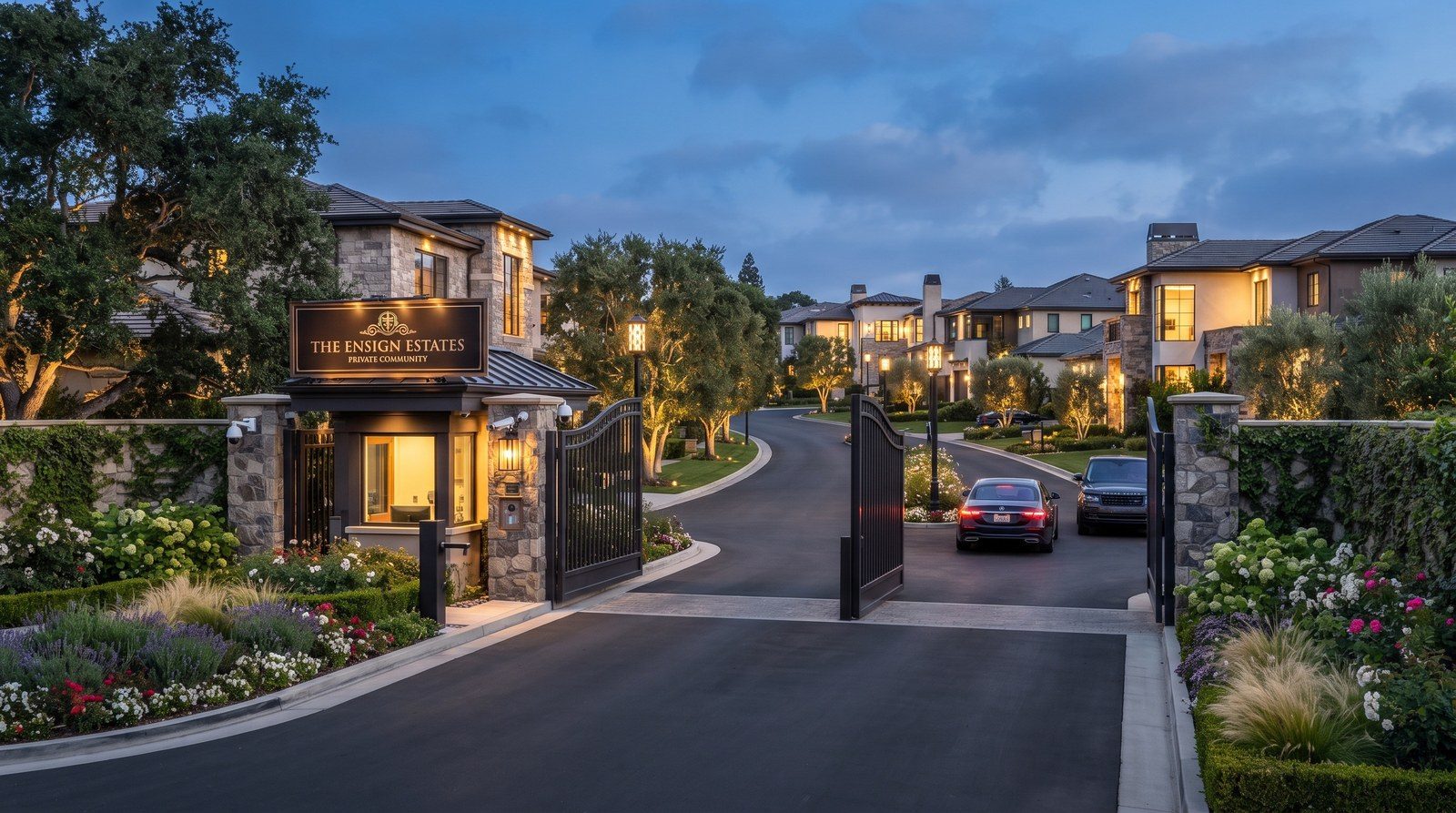
Access control for gated communities — the gate and everything behind it
Malibu does two jobs in an HOA: the entrance, and the amenities residents drove through it to reach. Both run on one system, one credential and one set of rules the association controls.
The gate is only half of it
Most communities think about access control as a gate question, and the entrance is where the money usually goes. But a resident interacts with the gate twice a day and the amenities all week, and the amenities are where the association's rules actually get tested.
So Malibu runs both. Vehicle gates and pedestrian gates at the perimeter, then swimming pools and pool houses, tennis and pickleball courts, fitness centers, clubhouses and event space behind it — one system, one credential per resident.
The practical effect is that a resident stops carrying a gate remote plus a pool key plus a fob for the fitness room plus a code for the clubhouse, and the association stops maintaining four unrelated ways of letting people in.
What it does for an association
Vehicle gates
The entrance is the door most residents use most often. Controlling it on the same system as everything else is what removes the separate gate remote from the equation.
Pedestrian and perimeter gates
Walk-in gates, pool deck gates and the side entrances people actually use are usually the weakest points in a community that has invested heavily in the main gate.
One credential, not four
A gate remote, a pool key, a fob for the fitness room and a code for the clubhouse become one credential per resident. Fewer things to issue, fewer things to lose, one place to turn them off.
Amenity hours the gate enforces
Pool hours stop being a posted sign that someone has to enforce and become a schedule the door keeps. The same applies to courts, the fitness center and the clubhouse.
Landscapers, pool service and contractors
Vendors get credentials scoped to the gates and the hours their contract covers, set to expire when it ends — rather than a gate code that circulates for years after the contract does.
Something to show the board
Every gate and amenity event is logged by credential and timestamp. When there's a question about after-hours pool use or who propped the side gate, the answer is a record rather than an argument at the next meeting.
Rules the board can actually enforce
An association's amenity rules are usually sound and usually unenforceable. Pool hours are posted and ignored. The fitness room is supposed to be residents only. Access is meant to end when someone's standing with the association does, and in practice it doesn't, because the way in is a key that was copied or a code that everyone knows.
Access control turns those rules into settings. Pool hours are a schedule the gate keeps. Amenity access is a permission attached to a resident rather than a key attached to a house. When the board makes a decision about a particular resident, a manager applies it in the software that afternoon — at the amenities, at the gate, or both — instead of changing a code for the entire community.
And because every event is recorded by credential and time, the questions that normally consume a board meeting have an answer attached to them.
What a community actually puts on it
- Vehicle entry and exit gates
- Pedestrian and perimeter gates
- Swimming pools and pool deck gates
- Pool houses and restrooms
- Tennis and pickleball courts
- Fitness centers
- Clubhouses and event space
- Boat ramps, docks and storage lots
- Maintenance and equipment buildings
- Mail kiosks and package areas
Managing an apartment or condo building rather than a gated community? The multi-family page covers the interior shared doors instead. Either way Malibu is sold and installed through certified Dealers, who scope the gates, the buildings and the wiring with you. Find a Dealer near you, or read what a system actually costs over five years before the board compares quotes.
Common questions
Bringing this to your board?
A Dealer can look at your existing gate, your amenity buildings and the wiring between them, and scope what it would actually take — which is the version a board needs before it votes. Book a demo or find a Dealer near you.