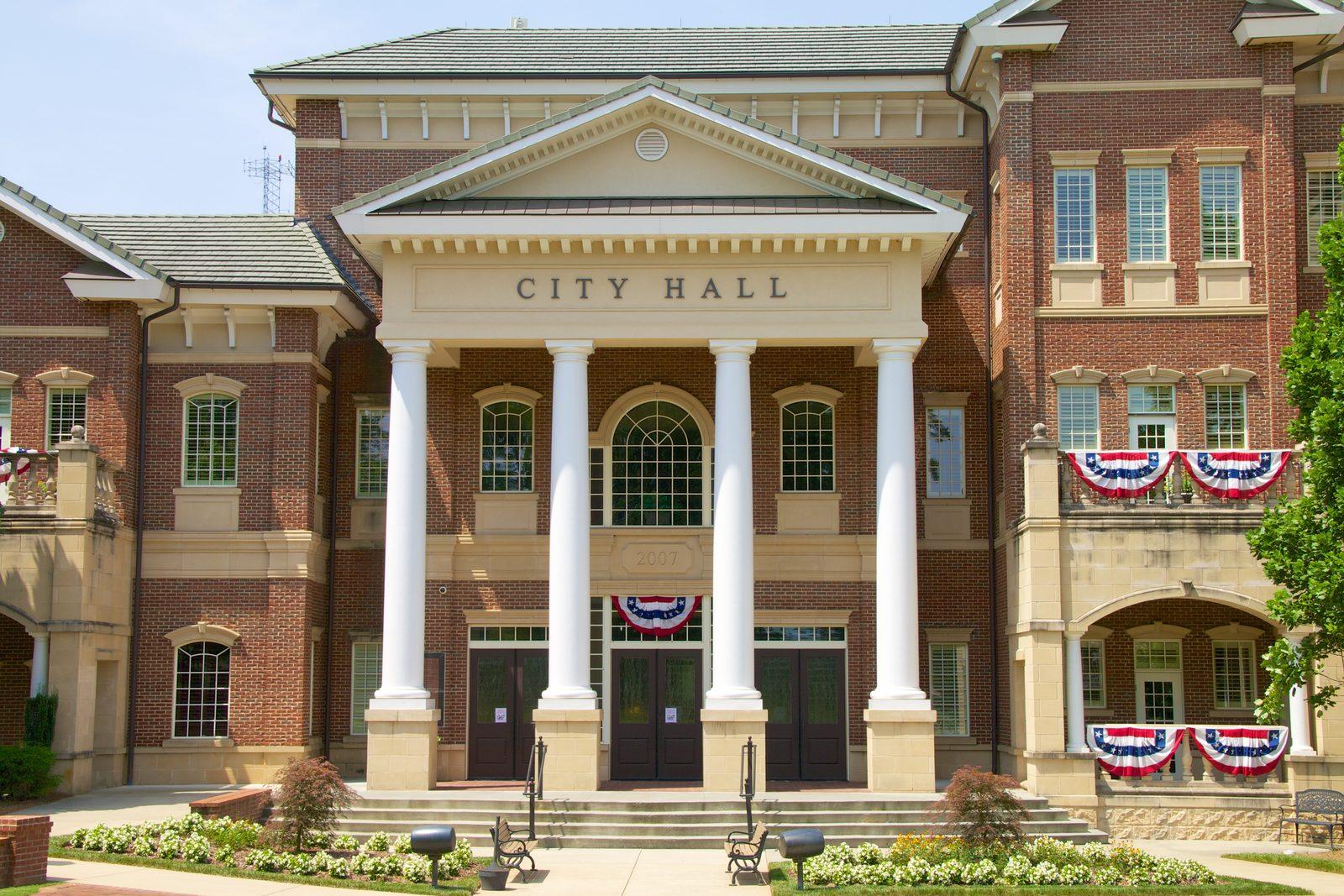
Access control for municipal government — every building type on one system
A city's buildings have almost nothing in common. A fire station has to open at three in the morning, a courthouse runs public and secured areas under different rules, and a park restroom has no one on site at all. Malibu runs all of them from one console.
The range is the problem
Municipal government is one of Malibu's strongest verticals, and the reason isn't a feature. It's that a single city operates a set of buildings no other kind of customer has to reconcile: a fire station, a courthouse, a detention facility, a public works yard, an administrative office and a few dozen park structures scattered across town.
Handled separately, each of those becomes its own arrangement — a card system here, a keypad there, a lockbox somewhere else, and a set of keys covering the rest. Each is administered by different people, none of them report to the same place, and no one can answer "who has access to what" across the city without walking the buildings.
The point of putting them on one system isn't that any single door gets better. It's that the city stops maintaining a half-dozen unrelated systems and starts running one, with one answer to that question.
What one system covers across a city
Fire stations
A crew that has to be out the door in minutes can't be waiting on a key. Credentials work around the clock, apparatus bays and living quarters can run on different rules, and mutual-aid or shift staff are added and removed in software.
Courthouses
Public areas and secured areas are the same building operating under two entirely different sets of rules. Judicial chambers, clerk offices, evidence and records rooms sit behind credentials while the public entrance runs on a schedule.
Detention and holding
Staff-only circulation, controlled areas and an access record of who went where and when — logged by credential and timestamp, on the same system the rest of the city runs.
Parks and unmanned sites
Restrooms, pavilions, gates and maintenance buildings spread across town with no staff on site. These are the buildings a schedule pays for itself on, and they're covered below.
Public works and fleet
Yards, garages, stockrooms and fuel buildings where crews start before office hours and the people with access change with the season and the contract.
Offices and council chambers
Ordinary municipal office space — plus the meeting rooms that are open to the public on a published schedule and closed the rest of the time.
The buildings nobody staffs
One municipal parks department runs Malibu across every park facility it operates. Those are the sites that make the clearest case for scheduling, because the alternative is a person and a vehicle.
Without access control, a restroom block, a pavilion or a gated parking lot gets opened by someone driving out at dawn and locked by someone driving out again at dusk — every day, across every park, all season. That route costs the same whether anyone uses the park or not, and it fails the moment the person driving it is on vacation.
On a schedule, the doors handle it. Seasonal hours are a setting rather than a new route. Maintenance and grounds staff carry one credential that works at every site they cover, and if a facility needs to stay open late for an event, that's a change made from a desk. We break down what the dawn-and-dusk route really costs and what changes when the doors keep their own hours.
One building, public floors and secured floors
A courthouse is the sharpest version of the range problem, because the range is stacked vertically inside one building. The public has entirely legitimate business on some floors — the clerk's counter, records, the courtrooms themselves — and none whatsoever on others: chambers, evidence, the network room, the routes people in custody are moved along.
That separation is usually designed into the floor plan and then handed to an elevator that will take anybody to any floor that asks. Putting the elevator on the system closes that gap: the floors a visitor should reach stay available to everyone, and the rest release only for a credential that's entitled to them. The same pattern turns up in any multi-storey municipal building where a public counter sits underneath staff floors.
Capacity is 40 floors on one controller — more than nearly any municipal building needs, and additional controllers cover the exceptions. Two things stay outside what can be promised from here. Interfacing with an existing elevator depends entirely on the equipment in the shaft, which a Dealer establishes with whoever services it. And as with the exit-door question further down this page, anything that changes how people leave a building in an emergency is a matter for your authority having jurisdiction, not an access control specification.
The doors a municipality actually puts on it
- Fire station entrances, apparatus bays and living quarters
- Courthouse public entrances and secured judicial areas
- Clerk offices, evidence and records storage
- Detention and holding facility staff areas
- Park restrooms, pavilions and vehicle gates
- Public works yards, garages and stockrooms
- Water, sewer and utility structures
- Municipal offices and council chambers
- Libraries, community centers and senior centers
- Server rooms, radio and communications equipment
Malibu is sold and installed through certified Dealers, who scope the buildings, the wiring and the phasing with your departments. Find a Dealer near you, or see the six questions to ask any Dealer before you put anything out to bid.
Common questions
Scoping a municipal rollout?
Whether it's one facility or every building the city operates, a Dealer can scope the buildings, the wiring and the phasing — including the sites you'd add in a later budget cycle. Book a demo or find a Dealer near you.